


Google I/O this year was about what comes after chatbots: agents everywhere, Gemini underneath everything, and a product stack built for a different way of working.
I’ve been going to I/O since the first event in 2008. I was there when everyone fit on the plaza outside Charlie’s and when Sergey had sky divers deliver Google Glass to the stage at Moscone. The event has changed a lot, but the pattern this year felt familiar: lots of launches, but one clear story underneath them.
We didn’t really announce anything new for NotebookLM at I/O. Instead, we shared that people have created more than 1.5B notebooks, slide decks, podcasts, and other artifacts since launch. That is not the flashiest announcement, but it matters because it says the product has moved past “is this real?” and into “how much bigger can this get?”
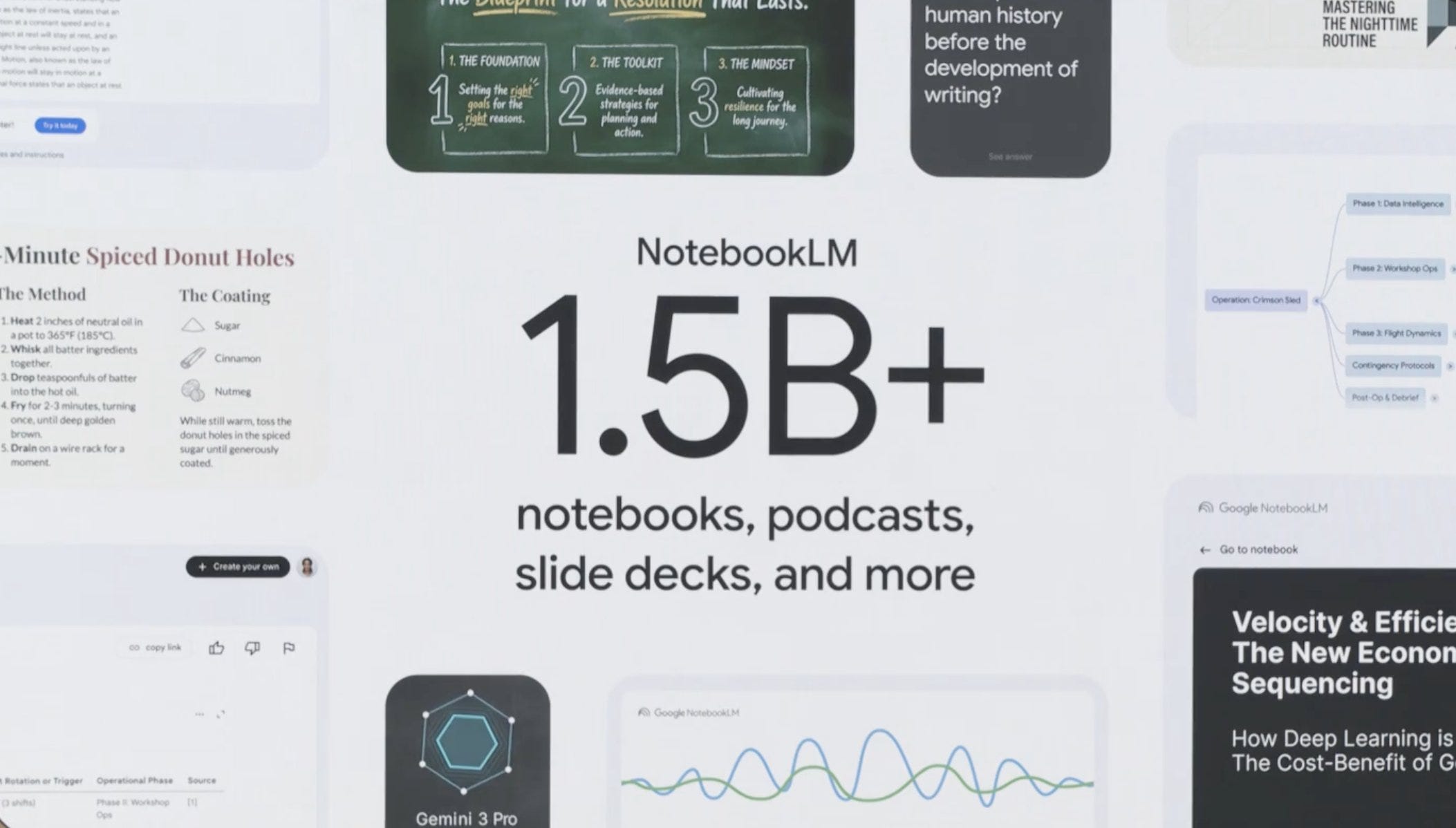
NotebookLM has found a real audience by delivering something people understand and value. When I talk to people about how they use it, I’m always struck by the ingenuity they bring to it. The roadmap is still driven by user value, and that usually means quiet progress instead of big stage moments. Audio Overviews in 2024 was one memorable exception. Most of the time, the product just keeps getting better.
I tend to remember maybe two or three announcements from each I/O (out of 100). This year, people were looking for Gemini, agents, and augmented reality. I think the show delivered on those dimensions, so I’ll focus on the parts that felt most important to me.
Gemini 3.5 Flash Led the Show
Gemini 3.5 Flash was the centerpiece of I/O this year. AI coding is one of the places where LLMs have found real product-market fit, so the natural comparison is coding-specific benchmarks. That matters, but speed is the real story here. Flash delivers strong performance at a much faster pace than the alternatives.
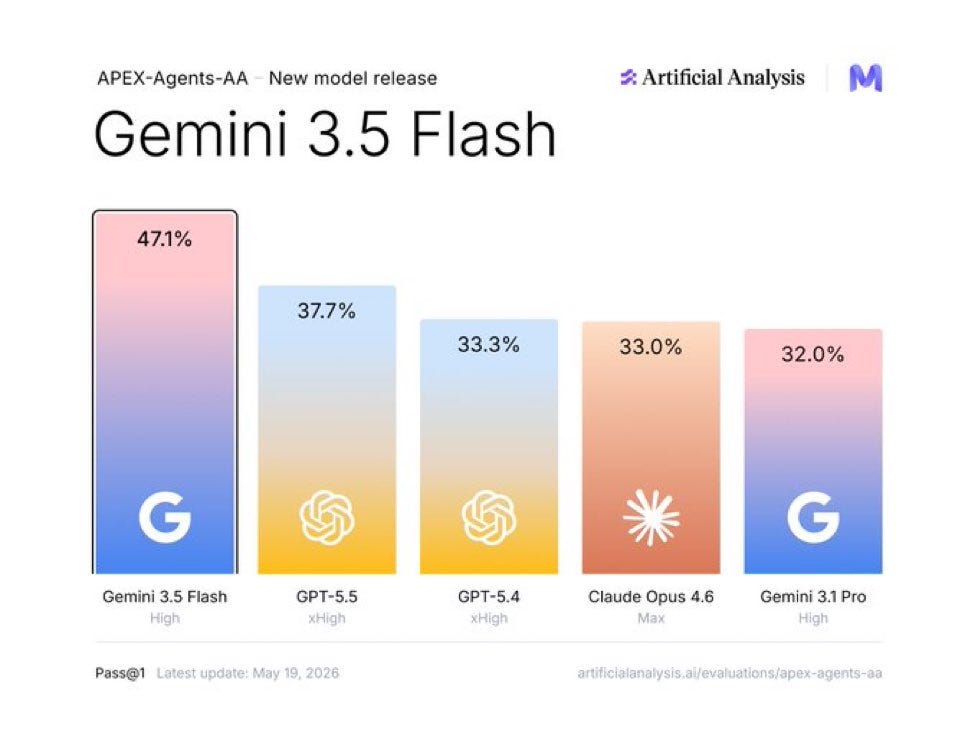
I’ve been using it for awhile now, and it’s overtaken other models in my workflow. I knew it was good when I found myself annoyed not to have it on personal projects at home. With access to pretty much everything else on the market, I still missed Flash. Once you get used to that speed, it is hard to go back.
That Gemini 3.5 Flash is the model Google used to define I/O is telling. The pitch is not just that it is better. It is that it is fast enough to be useful across the places where Google wants AI to live: Search, Android Studio, AI Studio, and the broader developer stack via a refreshed Antigravity. Google is positioning this as the practical default for agentic work, not just the model you benchmark and admire.
Flash is also strong at tool calling, which is essential for agentic workflows. It’s the first model I’ve used that feels like it understands how and when to use the range of tools and skills I make available to it. That changes the experience a lot, because the model is not just answering well. It is taking action well. Runescape-Bench is one benchmark that tries to measure that, and Flash leads there too:
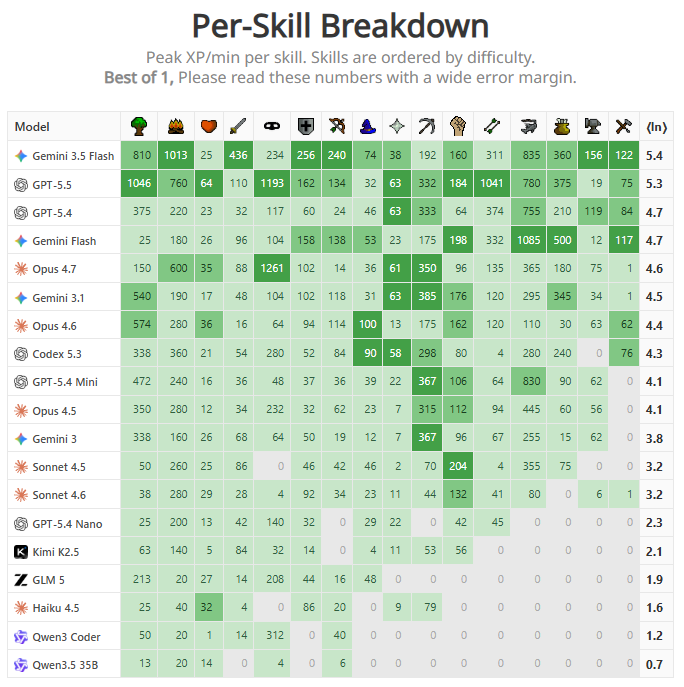
The important thing here is the shape of the claim. Google is no longer arguing for intelligence in the abstract. It is arguing for a combination of speed, capability, and action. That is a more mature product story, and I think Google is right to bet that users will care more about that than model theater.
If I had to boil it down to one line, it would be this: Gemini 3.5 Flash is Google’s way of saying the next frontier is not smarter chat. It is faster things that work.
Gemini Everywhere
Once you see what the model announcement really means, the rest of the event snaps into focus.
Antigravity, the new agent-first developer environment, shows how Gemini 3.5 Flash changes AI coding tools. Gemini Spark is about more personal agent experiences. Managed Agents in the Gemini API point in the same direction. So do the Android Studio updates. So does the way Google keeps moving agentic features into Search and the Gemini app itself.
That is the pattern worth calling out: Google is not trying to win on one heroic app. It is trying to make every surface speak a common agentic language.
That means:
Search becomes more agentic.
Developer tooling becomes more agentic.
The Gemini app becomes more proactive.
Android becomes a place where AI helps build, not just consume.
That is why I/O felt less like a product launch and more like a platform reset. Google is centering on a single idea: if the next interface is conversational and task-driven, then Search, Android, Chrome, and the rest of the stack need to lean into that way of working.
My takeaway
Google I/O was not a year of isolated launches. It was a shift in how Gemini is becoming the platform for the company. NotebookLM showed that some of Google’s AI products already have real momentum with real users. Gemini 3.5 Flash was the core technical statement. Antigravity, Gemini Spark, Managed Agents, Search changes, and the Gemini app all pointed to the same expansion.
The line tying all of it together is simple: Google wants Gemini to become the default layer across its ecosystem. The question now is not whether Google can ship AI features. It clearly can. The real question is whether these systems become useful enough that people trust them with real work. Keynotes are not the story. The story is whether the thing saves time in ordinary moments.
If Google can make Gemini a trusted layer underneath your work, your search, and your devices, what do you actually want it to do better?