


Why I’m Starting This
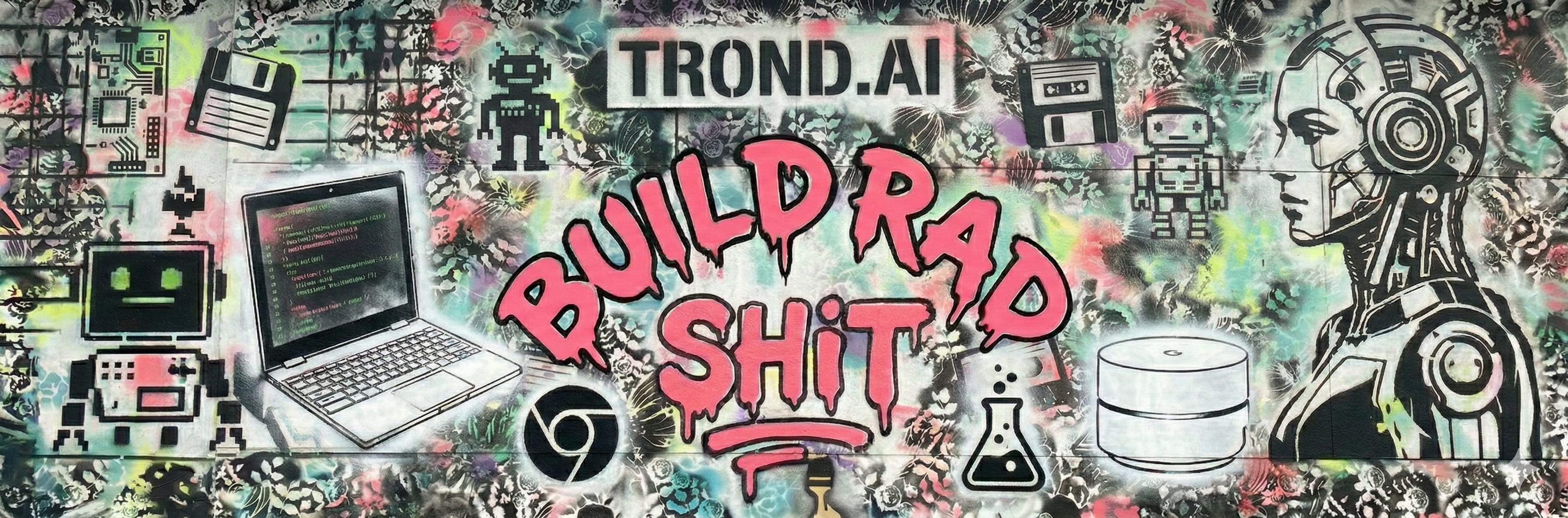
I’ve spent the last 18+ years at Google building 0-to-1 products. Some shipped to millions of people. Some died in committee. A few I’m genuinely proud of.
But the stuff I’ve learned the most from? The things I built mostly to figure out how they work. That’s where the magic happens.
Build to Learn
Earlier this year, I took a darkroom photography class. Not because I needed another hobby, but because I wanted to really understand photography at a deeper level. Especially light—I really wanted to understand it. How it behaves. Why some shots feel alive and others fall flat.
So I did what I always do: I built something.
I started building an app I’m calling GroundGlass. It’s a light meter for my phone that simulates how light works within a Hasselblad 503C medium format camera. Not because good light meters don’t exist (they do, and they’re better than mine), but because building one forced me to internalize the physics. Incident vs. reflected. The inverse square law. Why zone system metering actually works. The app is still a work in progress and I might even ship it one day, but that isn’t really the point.
Now when I shoot, I don’t think about the math. It’s just there. The app was never my goal. The understanding was.
This is how I learn. I build things to figure out how they work.
The Best Day Job in the World
I’m pretty lucky to admit that I may have the most fun job within one of the best teams at the best place to (IMHO) work in the World. By day, I’m a Product Director at Google Labs, where I work on AI products based on the very latest research and models from our partners at Google Deep Mind. I joined this team in 2023 and have been involved with a few extremely fun projects already. Some haven’t launched yet (shhhh), but a few that have include: Doppl, MusicFX, and the Audio Overviews features of NotebookLM. I may write about some of these (and other) experiences at some point in the future.
Fundamentally, I’m a 0 to 1 person at heart. When I joined Google in 2007, I told myself I’d learn my way around Silicon Valley and Google for maybe 5 years and then go out to start my own company. Well, it’s been nearly 20 years and I’m still here. A huge reason is because I’ve had the privilege of working for some incredible people — including Sheryl Sandberg, Sundar Pichai, Craig Barrett, Rick Osterloh, Susan Wojcicki, and most recently Josh Woodward.
The other reason is that I’ve had the opportunity to be hands on building amazing products within Google, usually from the earliest moments of ideation through to billions of dollars of impact. It’s a truly rare path I’ve made in my time here and one that’s been rewarding in so many ways. Some of the things I’m most proud of building include:
YouTube Create — A mobile video editing app. Making video editing tools that feel intuitive rather than overwhelming is hard. The project started as something almost entirely different and was acquired (internally) into YouTube where we reshaped our idea into one of the fastest growing mobile video apps in the world.
Pixelbook — Google’s premium Chromebook. I was the Product lead for our first-party laptop and tablet portfolio based on ChromeOS. We always knew it was going to be hard to sell $1000 Chromebooks, and it was — but we were clear-eyed about our goals and proud of what we built. There are some great stories to share about this experience.
Google WiFi — I started the project back before it was called OnHub and we were focused on ways to help more Google users get online. We were trying to answer a simple question: why does everyone’s home WiFi suck? The answer turned out to be complicated (mesh networking, antenna design, automatic channel selection, an app that doesn’t require a PhD to use). It’s now in millions of homes and won an iF Design Award. I’m proud of that one.
ChromeOS — I joined the ChromeOS team when we were about 30 people total and became the PM responsible for all of the system services layers of building an operating system. It was a wild ride surrounded by such amazing talent density. It truly took a passionate, brilliant team to convert the idea of netbooks into a full and complete computing ecosystem centered on the web.
It’s still amazing to me that I’ve been at Google so long and I’ve obviously had chances to leave, but Google is such a special place that it’s hard to seriously consider it. I joined Google right out of business school—MIT Sloan, if you’re keeping track—and before that I studied computer science at Northwestern, where I went deep on early AI systems and the primordial version of neural networks from the late ‘90s.
So when people ask if I think AI is going to change everything, I’ve got some context. For the record: yes, everything is going to change. My mission is to see to it that it changes for the better.
The Side Quests
A rewarding day job is one thing, but I’ve never given up on my side quests. I think this is where everything gets more interesting and I’ve pretty much always had a long list of things I was noodling on and building — often just to learn. It’s how I work. I’m not going to try to list everything, but a few things I’ve loved to do lately include:
Building with my kids. I’ve been helping my son (14) build an app called Quotivation. He wanted an app to put motivational quotes on his phone and was annoyed that all of the options in the app store required a subscription. So he’s building his own — with Antigravity naturally. My daughter (12) and I are also working on an app she wanted to build called Waddle, which is a cozy self-care app featuring a duck who bakes pastries. It has a pedometer and a focus timer. She designed the duck and is vibe coding with Gemini to make the app what she imagined. Building software with your kids is an amazing way to connect and it’s inspiring to see them get the builder bug.
SharpGlass. An open-source macOS app for creating and viewing 3D Gaussian Splats based on a 2D image. I saw Apple had launched a model called ml-sharp and I wanted to understand it a bit better because the technology is fascinating. So last week, I built an app (using Antigravity and Gemini 3 Flash) to experiment and learn. I put it all up on GitHub if you want to check it out.
Film photography. Last year, I signed up for a darkroom photography class at Foothill College where technically I’m a freshman working towards an associates degree. I’m learning to shoot film using a Leica M6 and a Hasselblad 503C. I’ve started developing my own film and making my own prints in a darkroom. In a world where I spend all day on AI and software, there’s something grounding about a purely analog process where you can’t undo anything. I’ve always loved photography, but film is altogether another level. I’ll probably have a bunch of photography related things to talk about. And if you’re curious I have some work posted at trond.photograhy.
Angel investing. I’ve invested in quite a few startups through Hustle Fund’s Angel Squad and as an AI advisor to Vitalstage Ventures. I’ve had several wins that I’m proud of and a few that look likely to hit in 2026. Also, quite a few misses — but that’s the name of the game. I love Angel Investing mostly because I learn a lot from founders who are building things I’d never think of. I’m pretty much only thinking about AI these days so if you want to approach me about something, come with a clear view on how you’re using AI in ways that solve meaningful user problems in a novel way that was previously infeasible. Or if you’ve figured out how to get power to datacenters more efficiently or more quickly. I hear that’s in demand these days.
Why This Newsletter
I’ve been writing internal docs at Google for almost two decades. Strategy memos, product specs, postmortems. Thousands of pages that maybe a few dozen people read.
I want to write for a wider audience. Not to build a personal brand (though I guess that’s happening), but because I’ve accumulated a lot of lessons I think are worth sharing—and I learn better when I share with others.
Here’s what you can expect:
The Big Leap. Why do AI demos or new models always look amazing but shipped products frequently disappoint? I work on this problem every day. I’ll share what I’ve learned about translating research into products people actually use. It’s linked to my personal mission: build rad shit people love.
Builder’s Notes. Lessons from founding products at Google—what worked, what didn’t, and what I’d do differently. Not sanitized corporate retrospectives. Real talk. I won’t be able to share things that are proprietary to Google, but the lessons that spawn from our work still matter.
Experiments & Learning. I build a lot of random stuff. Apps, tools, photography projects. I’ll share what I’m working on and what I’m learning from it. Most of it will be half-baked, but that’s often where the magic happens.
The Craft of PM. I’ve hired a lot of PMs. I’ve mentored a lot of PMs. In January, I’m teaching a session at Harvard Business School on “PMing in the Age of AI.” I have opinions about what makes great product people. Some of them are probably wrong. The craft is evolving quickly; let’s learn together what the future of the PM role means.
What I Won’t Do
I won’t pretend to have answers I don’t have. I won’t write corporate pablum. I won’t optimize for engagement at the expense of saying something true.
I’m also pretty tool-agnostic. I use Claude, Gemini, ChatGPT, Grok—whatever works for what I’m building. I work at Google, and yes I’m going to talk a lot about things that I’m excited about here, but I’m not just here to sell you Google products. I’m here to share what I’m learning and hopefully that spans the whole industry. There’s so much amazing work going on worth learning from!
Let’s Build Some Rad Shit Together
That’s what this newsletter is called because that’s what I care about. Not building things that look good in a pitch deck. Not building things that satisfy some quarterly OKR. Building things that are genuinely good—things people love to use.
If that sounds interesting, subscribe. I’ll be in your inbox roughly once a week.
First real post coming soon: Grading My 2025 Predictions. A year ago, I made 12 predictions about where AI would go. Some I nailed. Some I whiffed. I’m grading myself honestly—because that’s the only way predictions are worth making.
Let’s go.
—Trond